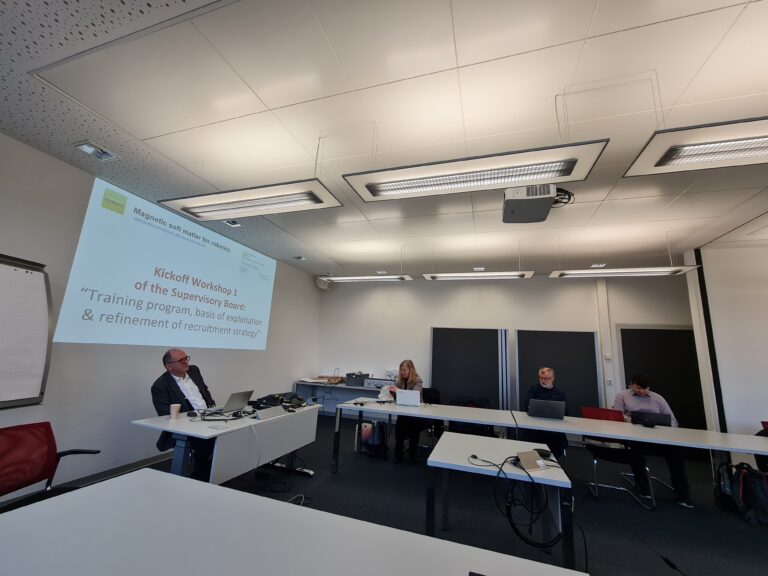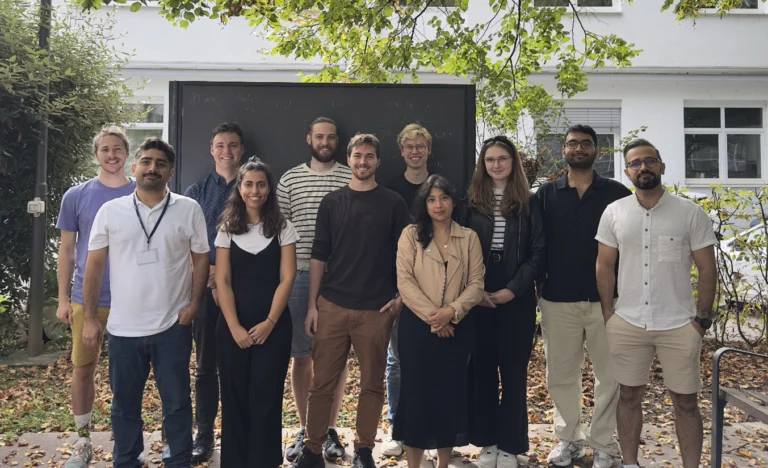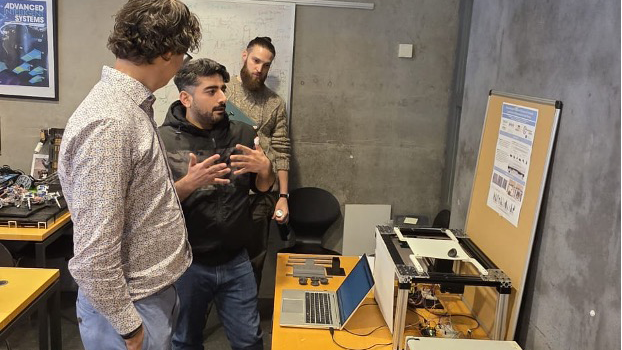
Researcher secondments are a key part of our consortium, offering early-stage scientists the opportunity to spend several months at partner institutions. These visits allow them to learn new techniques, access specialized equipment, and exchange knowledge across disciplines, which helps to spark innovation and strengthen collaboration between teams.
Advancing Materials Research at Jožef Stefan Institute
Troy Baker is currently undertaking his first secondment at the Jožef Stefan Institute, where over the past three months he has been working closely with researchers in the Materials Synthesis Department and the Department of Complex Matter. His project combines his background in mechanical engineering with the materials chemistry expertise of Lucija Drempetić at the Jožef Stefan Institute.
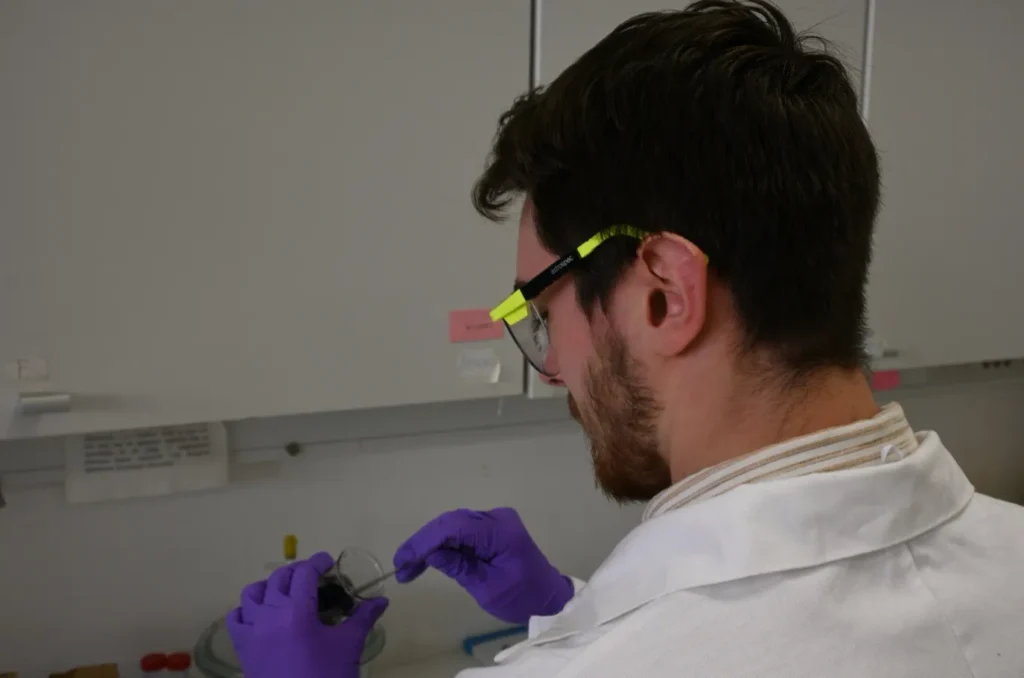
Figure 1 Troy Baker preparing MAE samples
Working side by side, they are exploring how magnetoactive elastomers (MAEs) can be used to create soft robotic actuators, flexible devices that move and adapt under magnetic fields. This secondment has given Troy the opportunity to work directly with the materials and to manufacture and test the actuators he originally designed. The collaboration is strengthening the link between materials research at the Jožef Stefan Institute and robotics development at Scuola Superiore Sant’Anna, demonstrating the value of interdisciplinary teamwork in advancing soft robotics.
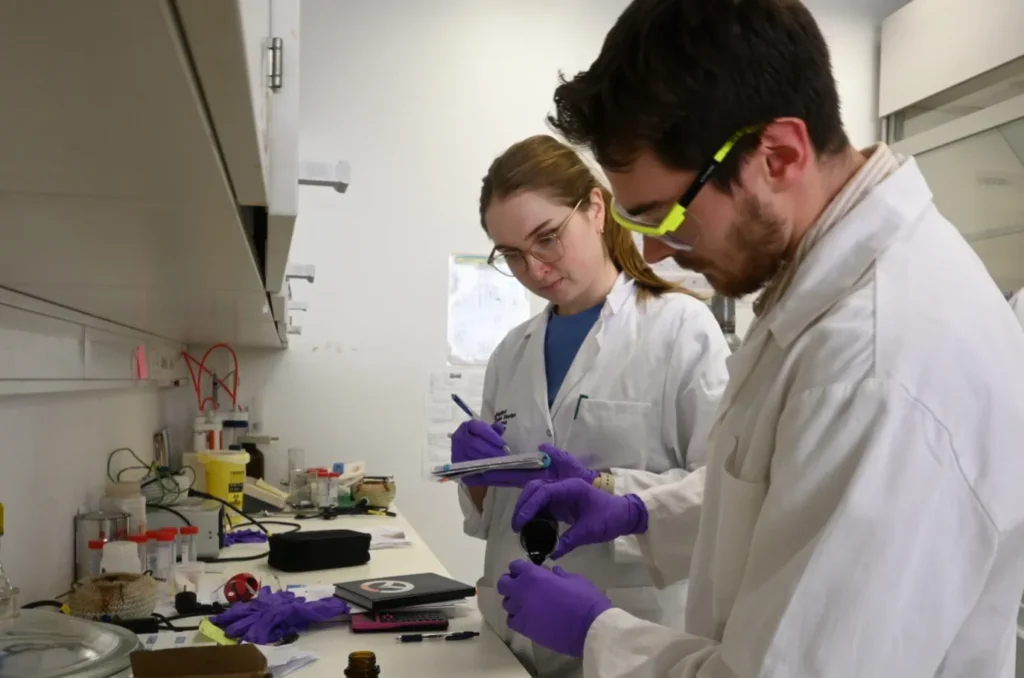
Figure 2 Lucija Drempetić assisting Troy Baker in sample preparation
Application-orientied Research
At the same time, Danica Tan has been carrying out her own three-month secondment at the Faculty of Mathematics and Physics at the University of Ljubljana, where she is collaborating with Arne Geldof, a fellow doctoral candidate based at the university. Her research focuses on laser-structured surfaces of MAEs, which are microscopic patterned textures that can influence how a robot grips or moves across different materials.
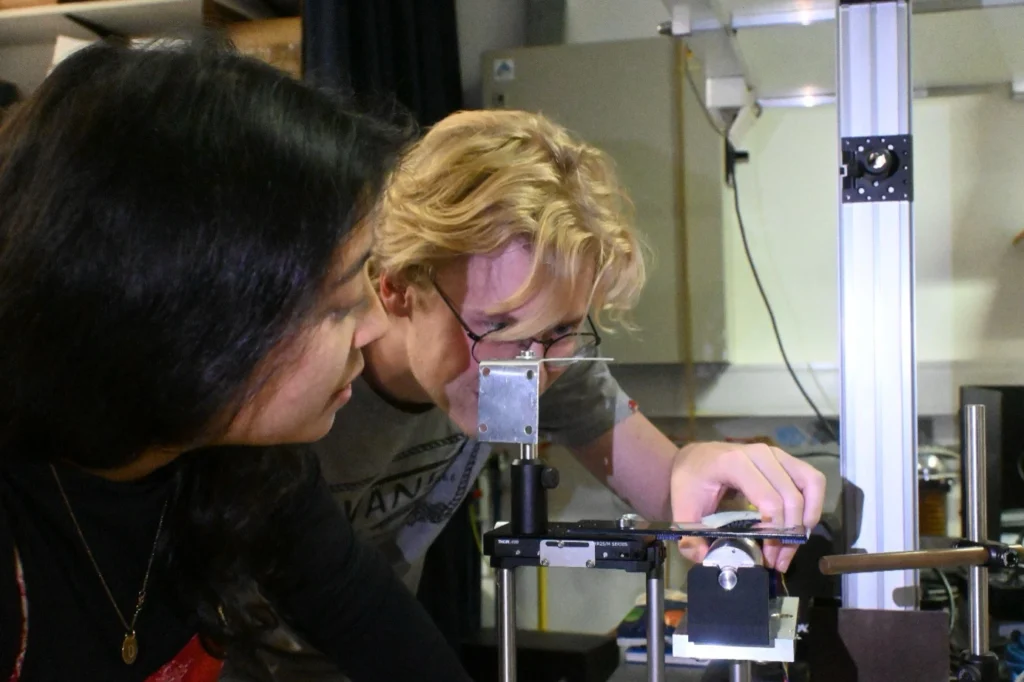
Figure 3 Danica Tan and Arne Geldof setting up a rotating quadrupole magnet
As an industrial PhD researcher at Wegard GmbH, Danica is studying how surface structure affects traction and directional movement. Her findings are providing valuable insights that will help guide the design of more efficient magnetoactive elastomer grippers for future soft robotic systems. Working in an international and interdisciplinary environment has given her a broader perspective on how surface design and materials science can be combined to improve robotic performance.
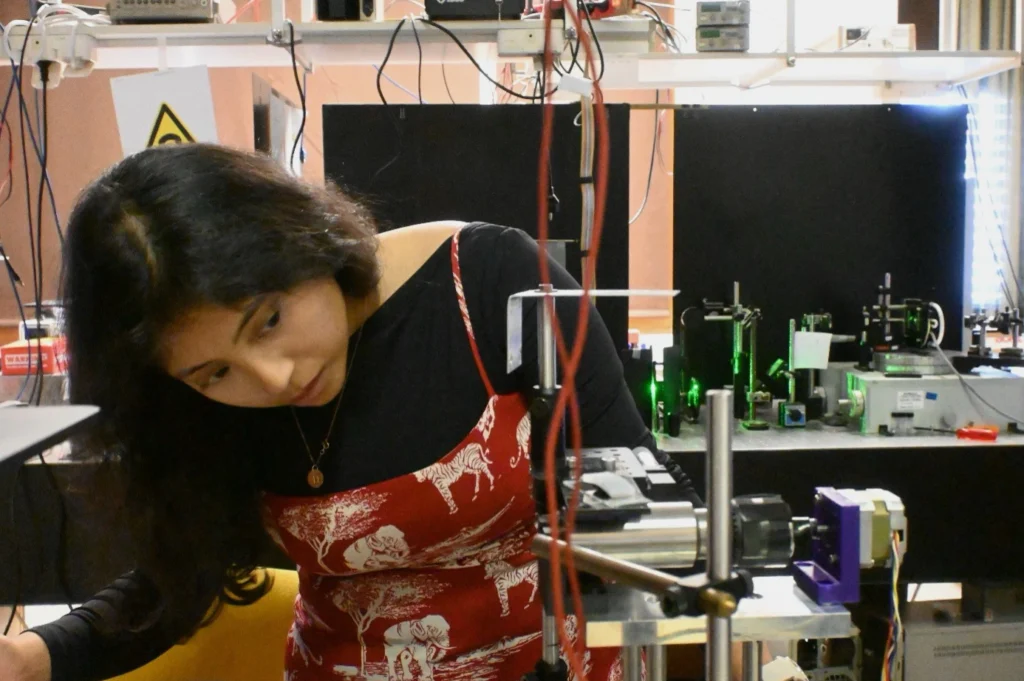
Figure 4 Danica Tan using a rotating quadrupole magnet to check the movement of laser-structured MAEs
Both researchers’ experiences highlight how secondments can open new directions for research, foster creativity, and connect different fields, from materials chemistry to robotics engineering, in the pursuit of smarter and more adaptive technologies.
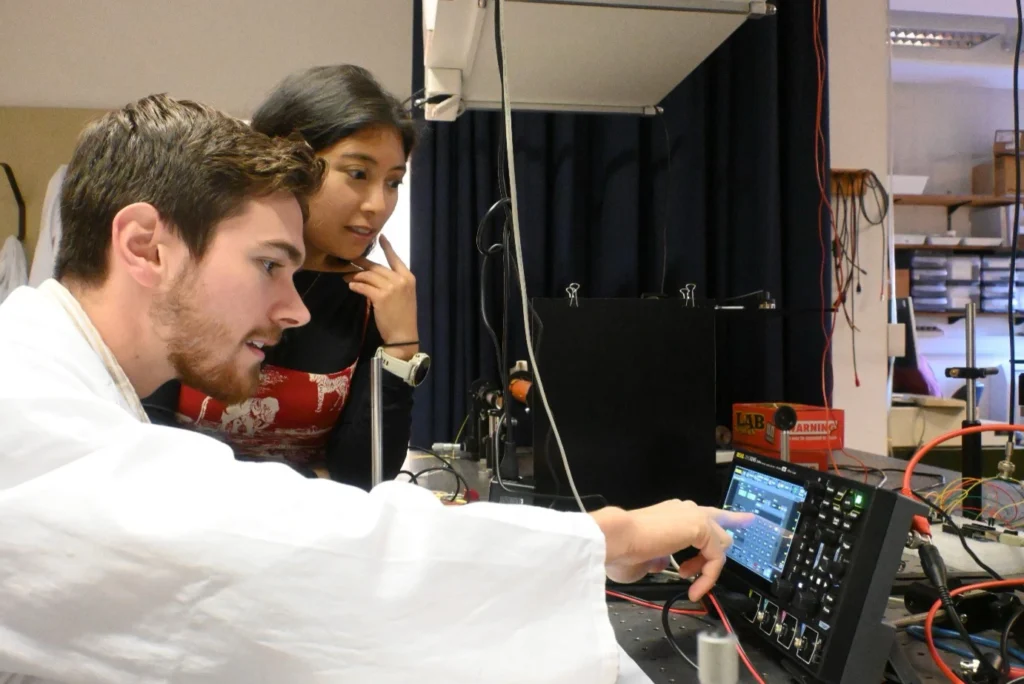
Figure 5 Danica Tan and Troy Baker using signal generator to investigate the effects of oscillating fields on prepared MAEs
Further information about the research activities of the host departments can be found at the following links:
Materials Synthesis Department, Jožef Stefan Institute https://www.ferrites.si/
Department of Complex Matter, Jožef Stefan Institute https://complex.ijs.si/
Faculty of Mathematics and Physics, University of Ljubljana https://www.uni-lj.si/en
To read more about the research work of the Doctoral Candidates at the MAESTRI project please click here Doctoral Candidates – MAESTRI